Mon to Fri, 7:30 AM to 5:30 PM

Open Saturdays by appointment only. Call to book

Brake repair in Corona, with a straight answer first.

A new noise or a pedal that feels wrong is unsettling. Tell us what you're noticing. We'll inspect it, show you photos and videos of what we find, and explain what's urgent, what's recommended, and what can wait.

  • ASE-certified technicians
  • CARFAX Car Care Service Center
  • RepairPal
  • ATI
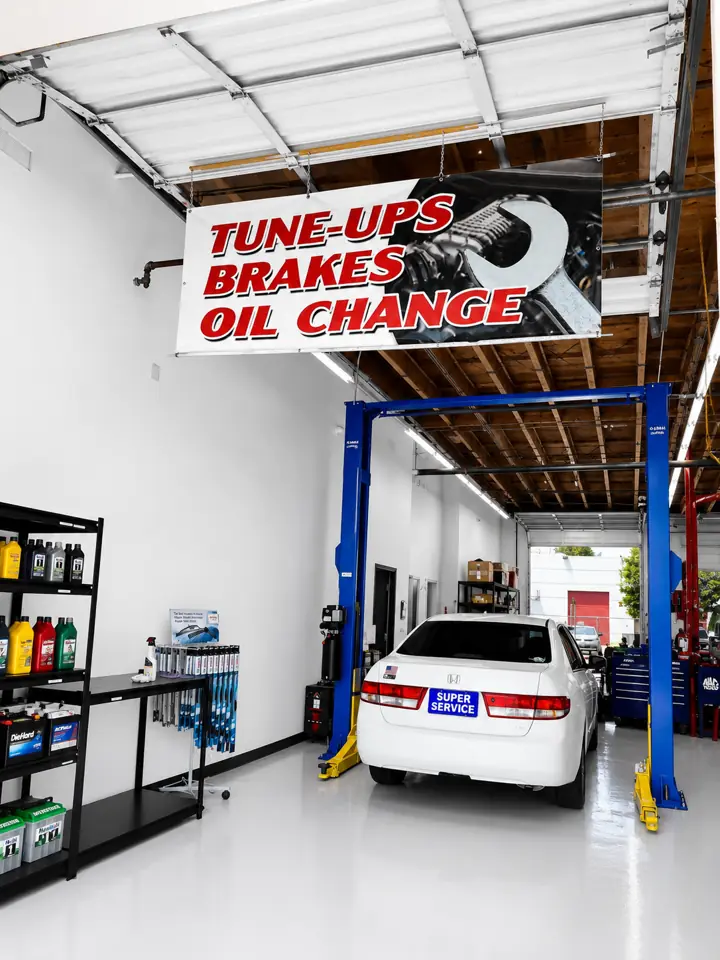
A car on a lift in a bright service bay under a banner for tune-ups, brakes, and oil changes
You approve all work before it begins.

What are your brakes telling you?

Pick what you're noticing. You'll see what it commonly means, how urgent it is, and the one next step we'd suggest.

Start with what you hear or feel.

Each choice shows an honest urgency level:

  1. Book soon
  2. Come in right away
  3. Stop driving. Call us.

Squealing or squeaking

  1. Book soon
  2. Come in right away
  3. Stop driving. Call us.

What it commonly means

  • The pads may be worn down to their wear indicator, a small metal tab built to squeal as a warning.
  • Surface moisture or light rust after the car sits, especially on damp mornings. This usually fades after a few stops.
  • Pads that have hardened or glazed from overheating.

What to do

If it fades after a few stops, keep listening. If it happens every time you brake, book an inspection soon, before it turns into grinding.

Book an inspection online

Grinding or scraping

  1. Book soon
  2. Come in right away
  3. Stop driving. Call us.

What it commonly means

  • Pads worn through to their metal backing, so metal is scraping the rotor.
  • A stone or debris caught between the rotor and its shield.
  • Rotor damage that is already underway.

What to do

Drive as little as possible and call us. Metal-on-metal wear can reduce stopping power, and it damages rotors quickly, which turns a smaller repair into a bigger one.

Call (951) 393-0278

Pulsing or vibration

  1. Book soon
  2. Come in right away
  3. Stop driving. Call us.

What it commonly means

  • Uneven rotor thickness, often called warped rotors, felt through the pedal.
  • Pad material deposited unevenly on the rotor surface.
  • A shake in the steering wheel while braking can also point to front brake or suspension parts.

What to do

Book an inspection soon. If the vibration is strong or getting worse, treat it as come in right away.

Book an inspection online

Soft or sinking pedal

  1. Book soon
  2. Come in right away
  3. Stop driving. Call us.

What it commonly means

  • Air in the brake lines.
  • A brake fluid leak, or fluid that is low.
  • A problem inside the master cylinder, the part that turns pedal pressure into braking force.

What to do

Stop driving when it is safe to do so, and call us. A pedal that feels spongy or sinks toward the floor means the brakes may not stop the car the way they should.

Call (951) 393-0278

Pulling to one side

  1. Book soon
  2. Come in right away
  3. Stop driving. Call us.

What it commonly means

  • A caliper that is sticking and not releasing.
  • A brake hose that has collapsed inside, trapping pressure on one side.
  • Fluid or grease on the pads, or pads wearing unevenly.

What to do

Limit driving and call us. If the car pulls even when you are not braking, the cause may be tire pressure or alignment instead. Read about wheel alignment.

Call (951) 393-0278

Brake warning light

  1. Book soon
  2. Come in right away
  3. Stop driving. Call us.

What it commonly means

  • A red BRAKE light can mean the parking brake is still on, the brake fluid is low, or there is a problem in the hydraulic system.
  • An amber ABS light means the anti-lock system has a fault. Your regular brakes usually still work, but the anti-lock feature may not.

What to do

First, make sure the parking brake is fully released. If a red brake light stays on, stop driving and call us. If only the ABS light is on, book an inspection soon.

Call (951) 393-0278

This guide is for education and can't diagnose your car. A technician confirms the cause.

What happens when you bring it in

  1. Friendly check-in

    Tell us what you're hearing or feeling. We take the time to understand it.

  2. We show you what we see

    Your digital inspection comes with photos and videos of your brakes, sent to your phone.

  3. Straight answers

    We explain what's urgent, what's recommended, and what can wait.

  4. You decide

    You approve all work before it begins. No high pressure. You make the decisions for your vehicle.

  5. Coverage you can ask about

    Ask about our 3-year, 36,000-mile nationwide parts and labor warranty on qualified repairs. We're happy to walk you through the details. We make it easy to do business with us.

    Brake pads, rotors, drums, sensors, and brake fluid are wear items and aren't covered by the warranty. Ask us which parts of your repair qualify. Read the warranty terms.

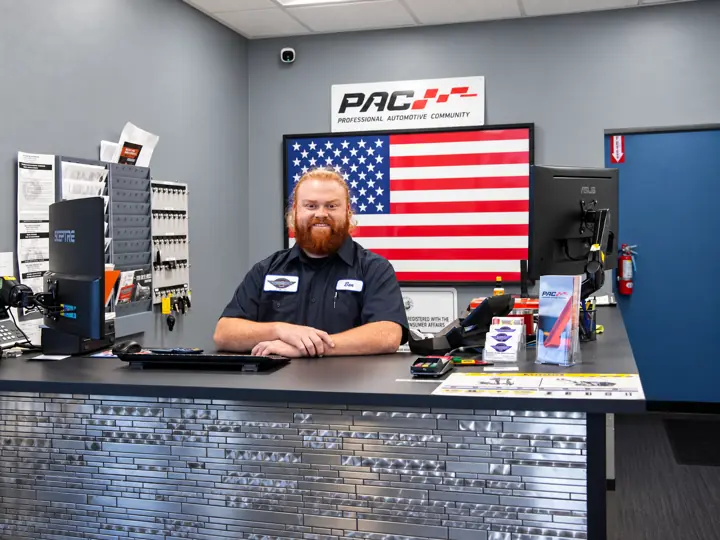
A smiling service advisor at the front counter of Super Service of Corona Hills

How brakes wear, and why it matters

Every stop turns motion into heat through friction. Some parts are built to wear away doing that job, and others should last much longer. Knowing which is which makes a repair estimate easier to understand.

Brake pads
Friction material that presses against the rotor to slow the wheel. Pads are made to wear down, which is why they're replaced on a regular basis.
Rotors
The metal discs the pads squeeze. They wear thinner over time and can develop uneven spots that you feel as a pulse in the pedal.
Calipers
The clamps that hold the pads and push them against the rotor. A caliper that sticks can make the car pull or wear one side's pads faster.
Brake fluid
Carries the force from your foot to each wheel. It absorbs moisture over time, which is why it needs replacing on a schedule.
Hoses and lines
Carry fluid to every wheel. A leak or a collapsed hose can soften the pedal or cause a pull.

Why pads and rotors count as wear items

Pads and rotors do their job by slowly wearing away, the same way tires do. That's why they aren't covered by our 3-year, 36,000-mile warranty, and why we'd rather tell you now than surprise you later. Repairs to other brake parts may qualify. Ask us which parts of your repair are covered before you approve anything.

What wears brakes faster

Stop-and-go traffic, steep grades, towing, and heavy loads all ask more of your brakes. If your week includes rush hour on the 91, your pads are doing a lot of work. Measuring them during an inspection tells you where you stand, instead of guessing by mileage.

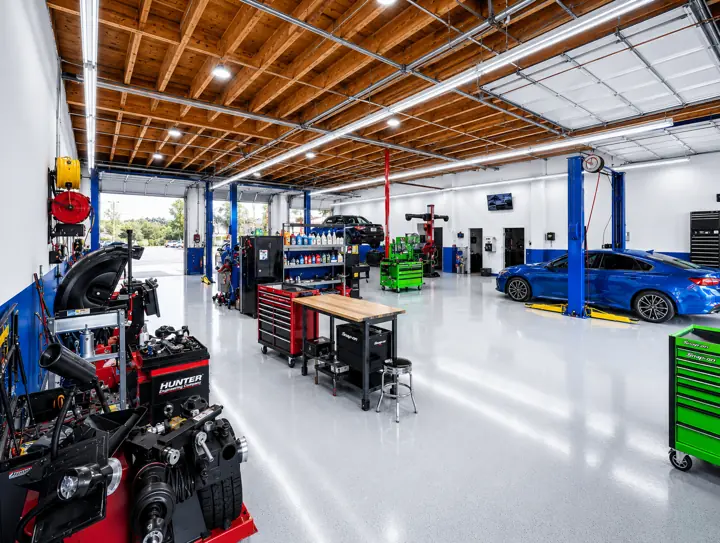
The clean, well-lit service floor at Super Service of Corona Hills with lifts and Hunter equipment
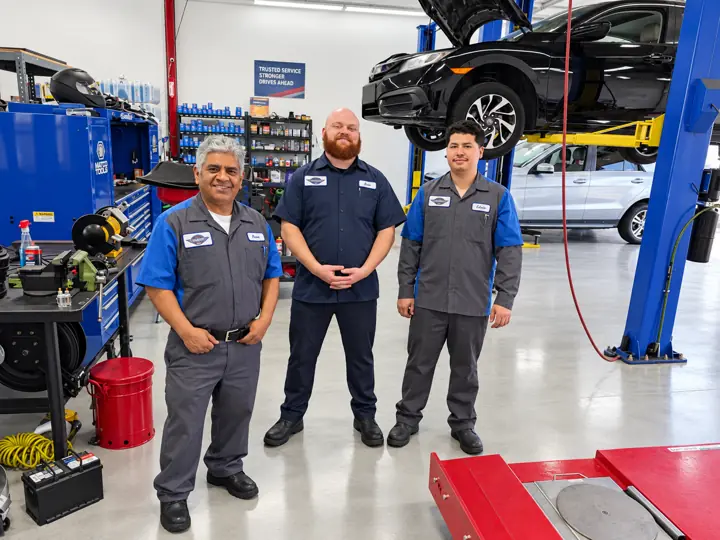
Three members of the Super Service of Corona Hills team standing in the service bay

Who's behind the shop

Super Service began when Ralph "Buddy" Dubois opened Placentia Super Service in 1978. In 2016, Andrew Bray and Bob Cornwall took it over. Andrew is an ASE Master Technician who earned ASE World Class status, and his passion is coaching young technicians. Bob built the "Raving Fan Checklist" so guests leave not just satisfied but glad they came.

They grew Super Service to four shops, including Super Service of Corona Hills, and were named National Multi-Shop of the Year by the nation's leading automotive training group.

Whether you're a newly licensed teen or a retired driver, you should feel sure you'll be treated fairly.
  • ASE-certified technicians
  • CARFAX Car Care Service Center
  • RepairPal
  • ATI
  • Digital inspections with photos and videos
  • Same-day service when possible

Ask about our 3-year, 36,000-mile nationwide parts and labor warranty on qualified repairs. We're happy to walk you through the details. We make it easy to do business with us.

Brake pads, rotors, drums, sensors, and brake fluid are wear items and aren't covered by the warranty. Ask us which parts of your repair qualify.

EasyPay financing may be available, subject to approval. Ask for details. About financing.

Ride assistance may be available. Ask for details.

Brake questions we hear often

How long do brake pads last?

There is no honest single number. Pad life depends on your vehicle, the pad material, and how and where you drive. Stop-and-go traffic, hills, towing, and heavy loads all wear pads faster. The reliable answer comes from measuring what is left, and your digital inspection includes photos so you can see it too.

Is it safe to drive with squeaky brakes?

A light squeak on the first few stops of a damp morning is often surface moisture and fades quickly. A squeal that shows up every time you brake, or keeps getting louder, often means the pads have worn down to their wear indicator, a small metal tab designed to make that noise. That is your signal to book soon, before it turns into grinding.

Do I need new rotors every time I replace my brake pads?

Not always. Every rotor has a minimum thickness set by the manufacturer. If a rotor is still within that spec and its surface is in good shape, it may not need replacing. If it is too thin, deeply scored, or causing a pulsing pedal, it does. We measure, show you what we find, and you decide.

What is a brake fluid service, and do I need one?

Brake fluid absorbs moisture from the air over time. That moisture lowers the fluid's boiling point and can corrode parts inside the system. A brake fluid service replaces the old fluid with new. Your owner's manual lists the interval for your vehicle, and we can check the fluid's condition during an inspection.

Are brake pads and rotors covered by your warranty?

No. Brake pads, rotors, drums, sensors, and brake fluid are wear items, and our 3-year, 36,000-mile nationwide parts and labor warranty does not cover them. The warranty applies to qualified repairs. Ask us which parts of your repair qualify, and we will walk you through the details before you approve any work.

Can I come in on a Saturday?

We are open Monday through Friday, 7:30 AM to 5:30 PM, and on Saturdays by appointment only. Call (951) 393-0278 to book a Saturday visit. We are closed on Sundays.

Can I pay for a brake repair over time?

EasyPay financing may be available, subject to approval. Ask for details.

Can you help me get where I need to go while my car is in the shop?

Ride assistance may be available. Ask for details.

Which areas do you serve?

Our shop is in Corona, and we serve drivers from surrounding Riverside County communities, including Norco, Home Gardens, and Coronita.

Wasn't this shop Car Clinic?

Yes. This location was formerly Car Clinic. It is now Super Service of Corona Hills, part of the Super Service family of four shops, at 2189 Sampson Avenue #101a in Corona.
More from Super Service of Corona Hills

Not sure what you're hearing? Give us a call.

Tell us what you're noticing, and we'll help you figure out the right next step.

Super Service of Corona Hills
2189 Sampson Avenue #101a
Corona, CA 92879
Get directions